


 User-friendly interface makes it easy to navigate for all users
 Pricing requires a minimum of three users per plan





 Built for small-business owners & their teams

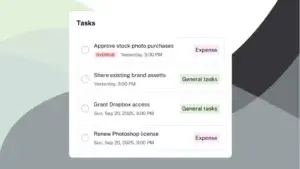





Keeping track of tasks, deadlines, and responsibilities can be overwhelming, especially for businesses managing multiple projects. Without the right tools, teams risk miscommunication, missed deadlines, and decreased productivity. That’s where task management software comes in. Whether you need a task management app for personal use, a team task management system, or a free task manager, these tools help streamline workflows and improve efficiency.
In this guide, we’ll explore the benefits of task management tools, key features to look for, and how they can help you stay on top of your workload.
 Our top picks for March 2026
 9.8
9.8

 100% Customizable
What is Task Management Software?
At its simplest, task management software is a digital tool designed to help you (or your team) capture, organize, prioritize, and track your work.
Think of it as a super-powered to-do list. Instead of scattered sticky notes or messy spreadsheets, a task management app provides a single, central place to see everything that needs to get done.
A good task management tool allows you to:
- Create and assign tasks with clear due dates.
- Break large projects down into smaller, manageable steps.
- Use it as a task tracker to monitor progress from “To-Do” to “Done.”
- Collaborate with your team by adding comments, files, and updates.
From a simple free task manager for personal use to a complex task management system for large teams, these tools are all about bringing clarity and accountability to your workflow.
Why Task Management Software is Essential
Investing in the best task management software isn’t just about organizing to-do lists—it’s about improving efficiency, collaboration, and accountability. Here’s how a task manager application can transform your workflow:
1. Better Organization and Task Prioritization
A dedicated task management system helps users break down large projects into manageable tasks, set deadlines, and prioritize work effectively. This clarity allows users to stay focused and complete tasks efficiently.
2. Improved Team Collaboration
For businesses, a team task management app ensures that everyone knows their responsibilities. Team members can track progress, assign tasks, and communicate seamlessly within the platform, reducing the need for endless email threads.
3. Increased Productivity with Automation
Many task management apps offer automation features that reduce manual work. By setting recurring tasks, notifications, and workflow automation, teams can save time and focus on more critical projects.
4. Real-Time Tracking and Insights
The best task mgmt software provides analytics and reporting, allowing managers to monitor task progress, identify roadblocks, and optimize workflows. This data, pulled from your task tracking system, helps improve overall efficiency.
5. Flexibility for Individual and Team Use
From personal productivity tools to enterprise-level task management systems, there’s a solution for everyone. Whether you need one of the best free task management tools or a comprehensive software, the right tool helps individuals and teams stay on track.
Key Features to Look for in the Best Task Management App
With so many options available, finding the best application for task management can be challenging. Here are some essential features to consider:
- Task Creation & Assignment: Easily create, assign, and track tasks with due dates.
- Collaboration & Communication: Share files, comment on tasks, and integrate with team chat tools.
- Workflow Automation: Automate recurring tasks and notifications to save time.
- Integration with Other Tools: Sync with tools you already use, like Google Calendar, Microsoft 365, Slack, or cloud storage apps.
- Customization & Scalability: Adapt workflows to fit your business needs, whether you’re a freelancer or managing a large team.
- Mobile Accessibility: Use a task management app on the go to stay productive from anywhere.
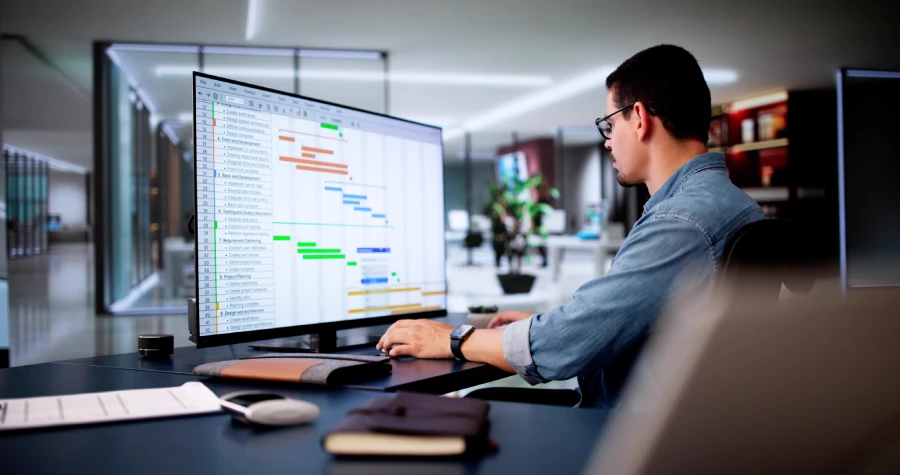
- Views & Task Tracking: A good task tracker isn’t just a list. Look for multiple views like Kanban boards, calendars, and Gantt charts to visualize progress and deadlines.
- AI & Automation: Automate recurring tasks and notifications. Look for a modern AI task manager that can help suggest priorities, categorize new tasks, and summarize progress.

How to Choose the Right Task Management Software For Your Small Business
The best task management software is simply the one that fits your workflow. Before you compare our top-rated picks, ask yourself these key questions:
- Is this for me or a team? A personal task manager app is very different from a team task management app built for shared dashboards and collaboration.
- What’s my budget? If your needs are simple, start with our list of the best free task management tools.
- What features are critical? Do you just need a simple task tracker for your to-do list? Or do you need an AI task manager with advanced reporting and automation?
Answering these will help you find the perfect task management solution from our list.
Our top picks for March 2026
Frequently Asked Questions
Q. What’s the difference between project management and task management software?
A. Think of task management software as being for a to-do list (the “what”). It helps individuals or teams manage, prioritize, and complete specific tasks. Project management software is for the entire picture (the “why” and “how”). It includes task management, but also adds budgeting, resource planning, and complex scheduling.
Q. What is an AI task manager?
A. An AI task manager uses artificial intelligence to help you work smarter. It can automatically categorize your tasks, suggest priorities based on your goals, estimate how long tasks will take, and even summarize your progress in reports.
Q. Can I really run my business with a free task manager?
A. For many freelancers and small businesses, yes. The best free task management tools offer robust features like task creation, deadlines, and basic collaboration. You’ll typically need to upgrade to a paid task management system for advanced features like reporting, automation, or managing many different teams.
Q. What is a task tracker and how is it different from a task manager?
A. These terms are often used together. A task manager helps you organize and plan all your tasks. A task tracker (or task tracking software) is often a feature within that manager that lets you monitor the progress, time spent, and status of those tasks in real-time.
